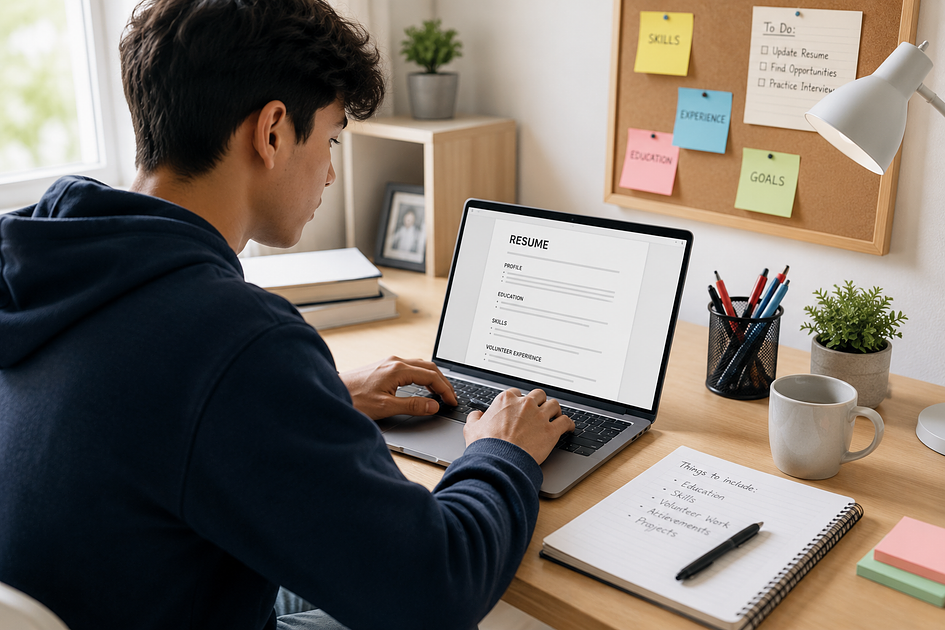
How to Write Your First Résumé With Little or No Work Experience
Writing your first résumé can feel tough if you do not have much work experience. You might look at the page and wonder what to include if you have never had a formal job.
A first résumé is more than a list of past jobs. It shows what you can offer an employer. Your education, skills, volunteer work, school activities, projects, and other experiences all help show you are ready to learn and contribute.
Here are steps to help you get started.
Start With Your Basic Information
Start your résumé by adding the contact details an employer will need.
Generally, this includes your:
- Full name
- Phone number
- Professional email address
- City and province
Make sure your voicemail is set up and check your email often. You do not want to miss an employer reaching out about an opportunity.
Introduce What You Can Offer
If you do not have much work history, add a short profile at the top of your résumé to introduce yourself.
Keep it brief. In two or three sentences, describe who you are, some of your strengths, and the type of opportunity you are looking for.
For example, a student applying for a customer-facing position might mention being dependable, comfortable working with people, and interested in gaining practical workplace experience.
Avoid filling this section with qualities simply because they sound good. Focus on strengths that are relevant to the position you are applying for.
Make Your Education More Visible
If you are a student or just graduated, your education might be the strongest part of your résumé.
List your school, your program or area of study, and the dates. You can also add courses, projects, certifications, awards, or achievements that fit the job.
If you are just starting out, these details help employers see what you have learned and what you can bring to the job.
Think Beyond Paid Work
Experience is not limited to paid jobs.
Have you volunteered at a community event? Helped organize a school activity? Participated in a club or sports team? Completed a major group project? Helped with a family responsibility on a regular basis?
These experiences can show you have important workplace skills.
For example, volunteering at an event may involve helping visitors and working as part of a team. Participating in a school club may involve planning and organization. Regular responsibilities at home may demonstrate reliability and time management.
Rather than only thinking about paid work, focus on what you did, your responsibilities, and the skills you used.
Identify the Skills You Already Have
You might have more skills than you think.
Think about what you have done at school, at home, while volunteering, or in activities. You may already have experience with things like:
- Communication
- Teamwork
- Organization
- Time management
- Problem-solving
- Customer service
- Computer programs or digital tools
- Languages
- Leadership
- Working independently
Be as specific as possible. Instead of listing every good quality, pick skills you can back up with real examples from your experience.
Pay Attention to the Job Posting
You do not have to use the same résumé for every job application.
Before you apply, read the job posting carefully. Look at the responsibilities and skills the employer wants. Then think about which parts of your experience fit best.
If a job values teamwork, highlight your experience with school projects or teams. If organization matters, mention times you managed schedules, tasks, or deadlines.
This helps make your résumé a better match for the job.
Keep Your Résumé Simple
You do not need a fancy design to make a strong first résumé.
Use clear headings, easy-to-read fonts, and consistent formatting. Leave enough space between sections so your résumé is easy to scan. Do not add extra graphics or information just to fill the page.
Most importantly, proofread your résumé before you send it. Double-check names, dates, spelling, grammar, and your contact details.
A simple, well-prepared résumé often makes a better impression than a complicated one that is hard to read.
Don’t Try to Make Your Experience Sound Bigger Than It Is
It is normal to have limited experience when you are just starting out.
You do not need to exaggerate your responsibilities, make up experience, or make a small role sound bigger than it was. Just describe what you did and focus on the skills and tasks involved.
Employers who hire students and entry-level candidates know that applicants are still building their work histories.
Your goal is to show what you can offer now and your potential to learn and grow.
Your First Résumé Is a Starting Point
Your first résumé will change as you gain more experience. A first job can add new responsibilities. Volunteering can help you build new skills. School projects, certifications, and future jobs will make your résumé stronger over time.
For now, focus on the experience you have so far.
You might not have a long work history yet, but you can still show employers your education, skills, reliability, experience, and willingness to learn.
Everyone starts somewhere. Your résumé is one of the first steps in showing employers you are ready to begin.