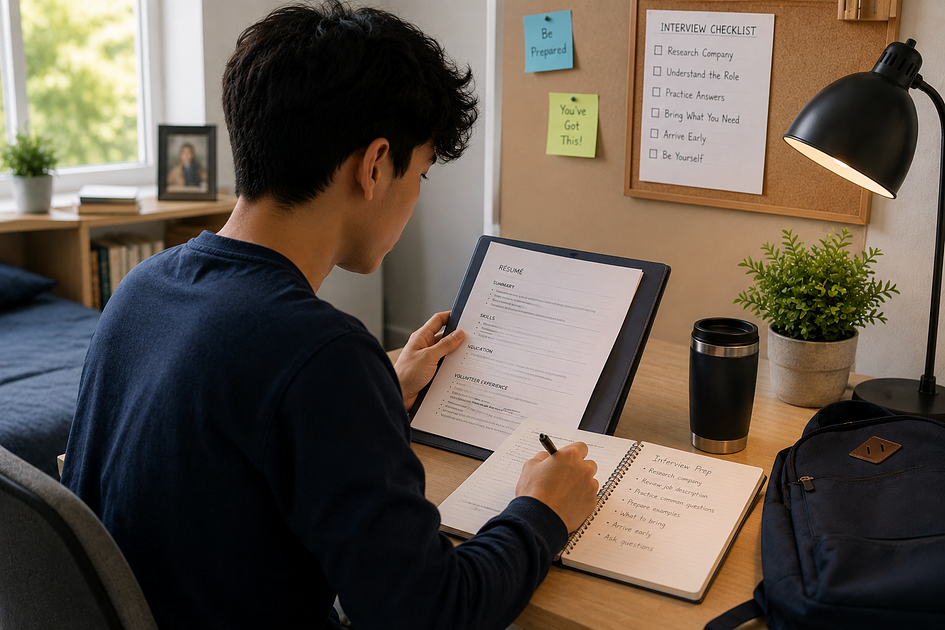
How to Prepare for Your First Job Interview
Getting invited to your first job interview is exciting, but it can also make you feel nervous. You might wonder what questions the employer will ask, what to wear, what to bring, or how to answer when you have never worked before.
You do not need to know everything in advance. Getting ready in advance can help you know what to expect and feel more confident during your first interview.
Learn About the Employer Before the Interview
Take some time before your interview to learn about the organization.
Check the company’s website to see what it does, what products or services it offers, and who its customers or communities are. If you can, review the job posting again and notice the responsibilities and skills listed.
You do not have to remember every detail about the company. The main thing is to understand where you are applying and what the job is about.
Doing this can also help you answer if the interviewer asks why you want the job.
Read the Job Posting Again
The job posting can give you hints about what the employer might talk about in the interview.
Look for things like helping customers, working with a team, organizing materials, using certain equipment, or working independently. Then think about times in your own life when you have shown these skills.
If the position requires teamwork, for example, you might talk about a group project, a sports team, a club, or a volunteer activity. If reliability is important, think of a responsibility that required you to show up, meet deadlines, or complete tasks consistently.
You may have relevant examples even if they did not come from paid employment.
Practice Talking About Yourself
One of the most common challenges in a first interview is not being used to talking about yourself in a professional setting.
Practice answering basic questions out loud. You might be asked:
- Can you tell me about yourself?
- Why are you interested in this position?
- What are some of your strengths?
- Why would you like to work here?
- Can you tell me about a time you worked with other people?
- How would you handle a difficult situation?
- What is your availability?
You do not need to memorize perfect answers. In fact, memorized responses can sometimes sound unnatural.
Instead, think about the main points you want to communicate and practice explaining them clearly in your own words.
Use Experiences You Already Have
If this is your first job interview, an employer cannot expect you to have years of professional experience.
Think beyond previous employment when preparing examples.
School projects can demonstrate teamwork and time management. Sports and extracurricular activities may show commitment and cooperation. Volunteer work can demonstrate responsibility and communication. Regular responsibilities at home can also help you develop organization, reliability, and problem-solving skills.
What matters is being able to explain what you did, how you approached the situation, and what you learned.
Prepare What You Need in Advance
Avoid leaving everything until the morning of your interview.
The day before, confirm the interview time and location. If the interview is online, check the meeting details and make sure your internet connection, camera, and microphone are working.
Depending on the interview, you may also want to have:
- A copy of your résumé
- Any documents the employer specifically requested
- A notebook and pen
- Contact information for your references, if requested
- Directions to the interview location
- The name of the person you are meeting
Choose what you will wear ahead of time. Your clothing doesn't need to be formal, but it should be clean, neat, and appropriate for the workplace.
Plan How You Will Get There
Arriving late can add unnecessary stress to an already unfamiliar experience.
If the interview is in person, check the location beforehand and decide how you will get there. Consider travel time, traffic, parking, or public transportation.
Aim to arrive a little early so you have time to settle before the interview begins. You generally do not need to arrive extremely early; being about 10 to 15 minutes ahead of your scheduled interview is usually enough.
For a virtual interview, sign in a few minutes early and make sure you are in a quiet place with minimal distractions.
Know What to Expect
Every interview is different, but many follow a fairly simple process.
The interviewer may begin by introducing themselves and explaining the position. They will then ask questions about you, your interests, availability, skills, and experiences.
You will usually have an opportunity to ask questions too.
Consider preparing one or two questions beforehand, such as: “What would a typical day in this position look like?” or “What kind of training would someone new to this role receive?” Asking a thoughtful question can also help you decide whether the job is a good fit.
It’s Okay to Take a Moment Before Answering
You do not have to respond to every question immediately.
If you need a few seconds to think, take them. If you do not understand a question, you can politely ask the interviewer to repeat or clarify it.
And if you stumble over an answer, keep going. An interview is a conversation, not a test where one imperfect sentence means you have failed.
Employers are getting to know you, and you are also learning about them.
Remember Why You Were Invited
It's easy to focus on everything you think you lack when preparing for your first interview.
But remember: the employer chose to invite you.
Something in your application suggested that you might be a potential fit for the position. Your interview is your opportunity to help them learn more about your skills, experiences, interests, reliability, and willingness to learn. You do not need years of work experience to have something valuable to talk about.
Your First Interview Is Experience Too
Your first interview may lead to your first job—or it may not. Either way, going through the process gives you experience that can make the next interview easier.
Prepare as much as you reasonably can, arrive on time, listen carefully, and answer questions genuinely.
You do not need to walk into your first interview knowing everything. You need to be prepared to talk about what you can offer, what you are ready to learn, and why you are interested in the opportunity.